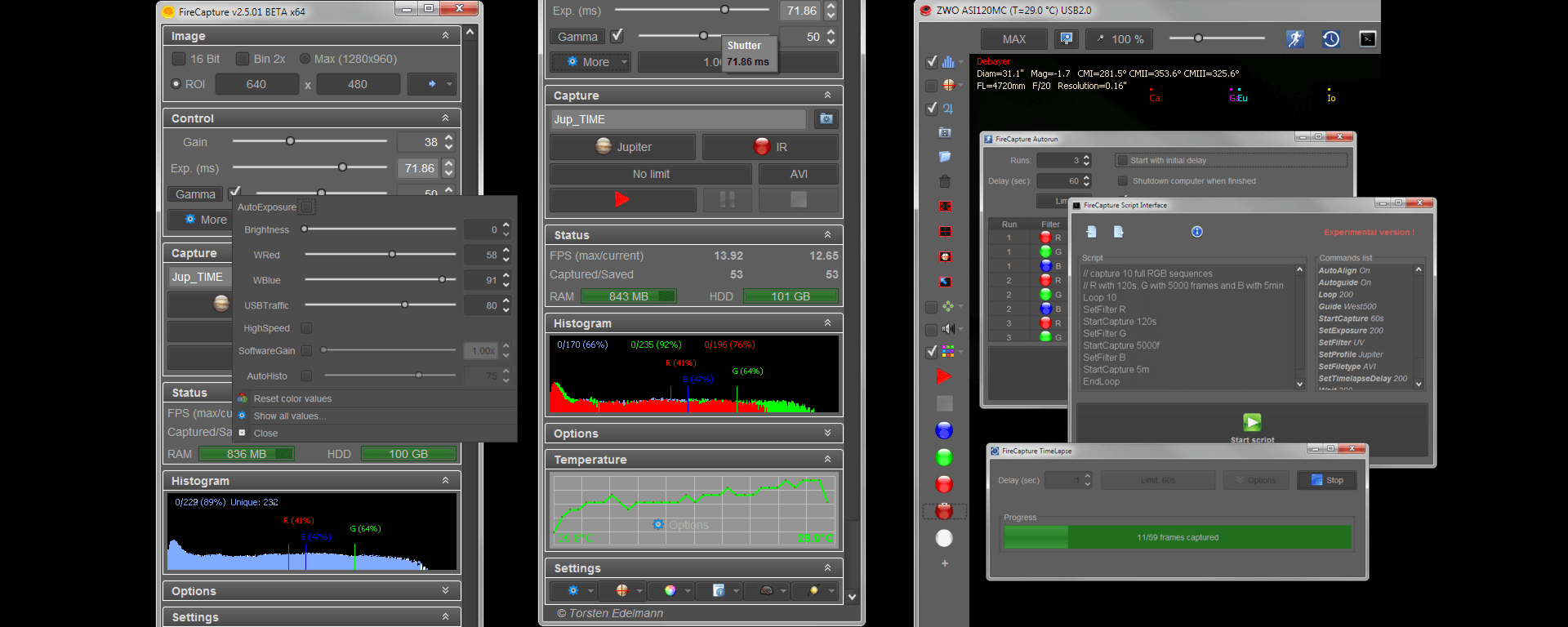
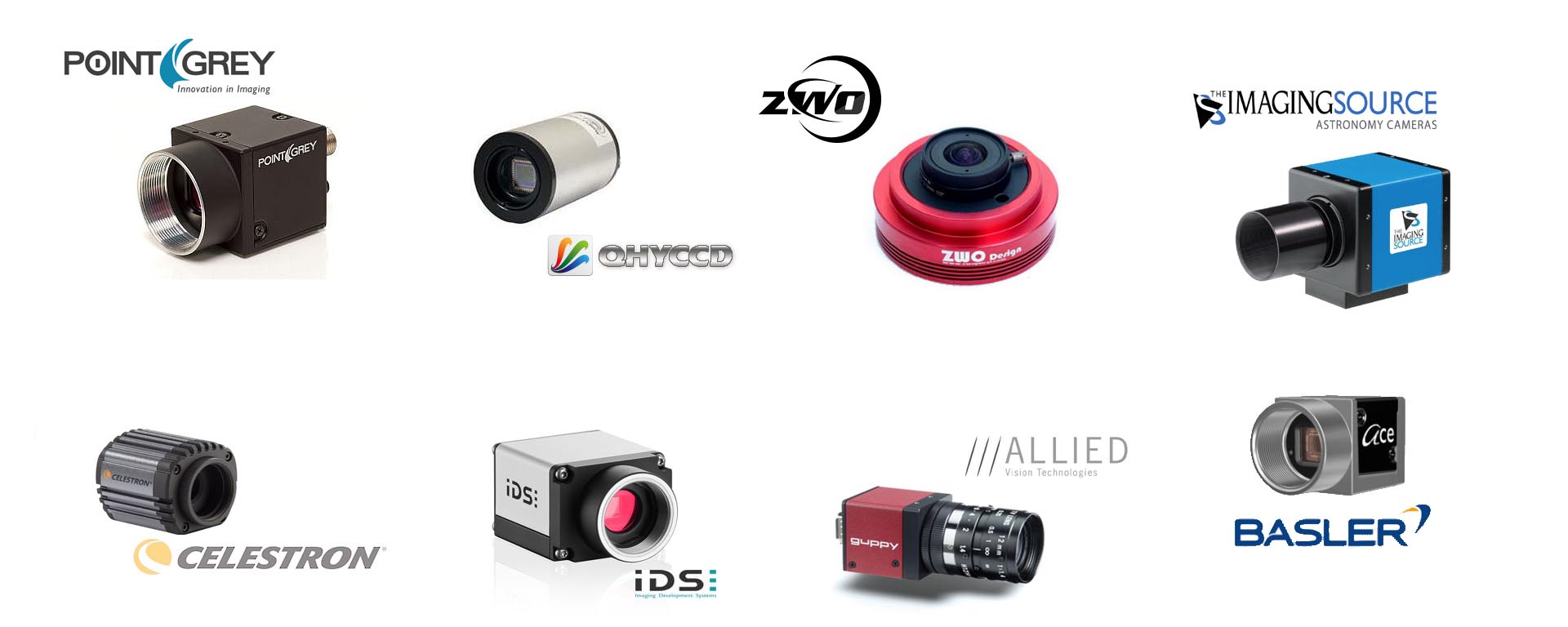
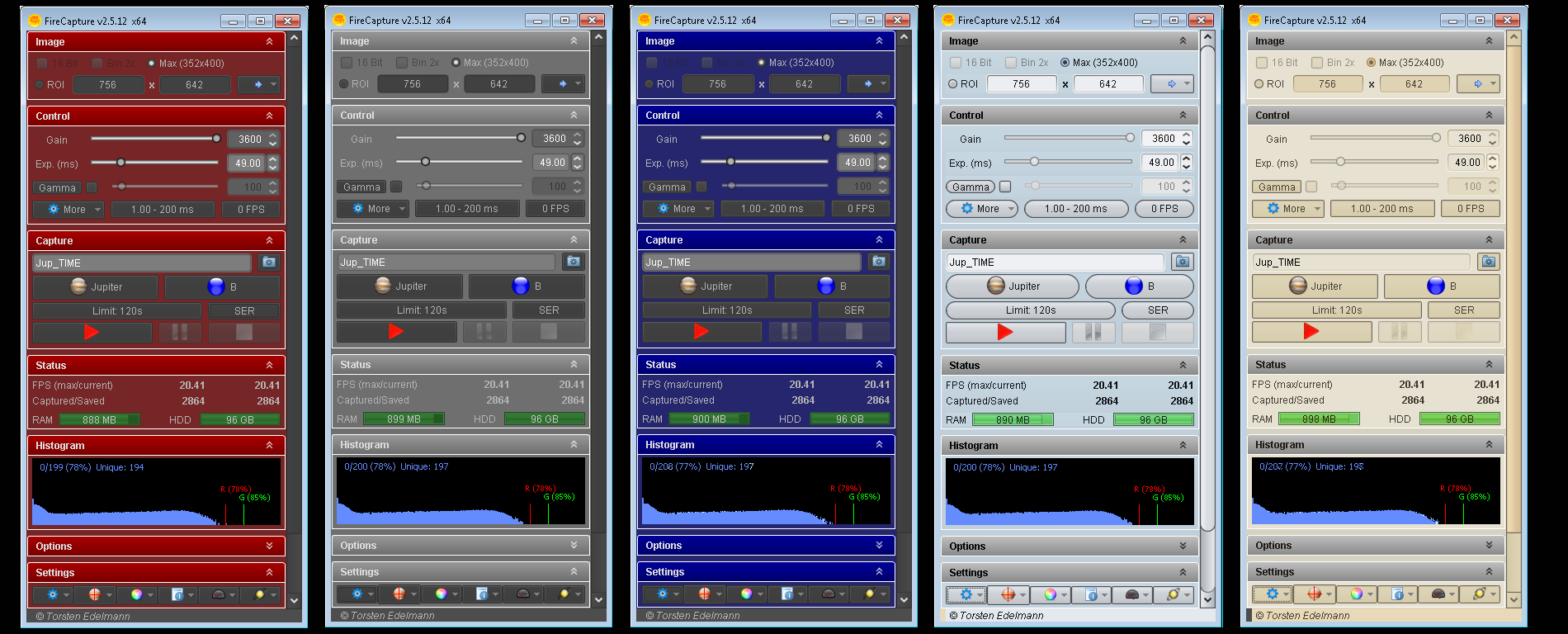
Raspberry support for FireCapture v2.6 and ZWO cameras !
| Compatibility |  FC v2.7.15 (x64) |
 FC v2.7.15 (x64) |
 FC v2.7.15 (x64) |
FC v2.7.15 (aarch64) |
|
|---|---|---|---|---|---|
 Altair Altair |
 |
 |
|
|
|
 ASCOM ASCOM |
 |
|
|||
 Basler Basler |
|
|
|||
 FLIR/FlyCap FLIR/FlyCap |
 |
|
|||
| FLIR/Spinnaker |
|
|
|||
 LUCID LUCID |
|
|
|||
 NexImage NexImage |
|
|
|||
 OGMA OGMA |
|
|
|
|
|
 PlayerOne PlayerOne |
|
|
|
|
|
 QHY QHY |
|
|
|
|
|
 Skyris Skyris |
|
|
|||
 SVBony SVBony |
|
|
|
|
|
 TIS
TIS |
|
|
|||
 Touptek/Omegon Touptek/Omegon |
|
|
|
|
|
 ZWO ASI ZWO ASI |
 |
|
|
|
|
Older Versions
Developing software is mostly fun, but it also takes up nearly all of my spare time. If you find FireCapture useful and would like to support me in continuing development you're welcome to donate a small amount of your choice.


Friedman wrote Capitalism and Freedom as a counter-strike. Based on a series of lectures at Wabash College, the book’s central thesis is startlingly simple yet radical:
A continuación, se presenta un resumen de sus pilares fundamentales:
Publicado originalmente en 1962, de Milton Friedman es una obra fundamental de la economía moderna que argumenta que la libertad económica no es solo un fin en sí mismo, sino una condición necesaria para alcanzar la libertad política . A través de una serie de ensayos, el Premio Nobel de Economía desafía la intervención estatal y propone al mercado libre como el mejor organizador de la sociedad civil . Ideas Centrales del Libro
Friedman used his philosophy to propose several specific reforms that were controversial at the time:
The 2008 financial crisis and the rising inequality of the 21st century have led many to challenge Friedman’s assertion that "the social responsibility of business is to increase its profits." However, even his critics admit that his defense of individual liberty and free speech (outlined in Chapter 1) remains one of the most eloquent ever written.
Capitalismo y Libertad de Milton Friedman: El Manifiesto que Cambió la Economía Moderna
Friedman wrote Capitalism and Freedom as a counter-strike. Based on a series of lectures at Wabash College, the book’s central thesis is startlingly simple yet radical:
A continuación, se presenta un resumen de sus pilares fundamentales:
Publicado originalmente en 1962, de Milton Friedman es una obra fundamental de la economía moderna que argumenta que la libertad económica no es solo un fin en sí mismo, sino una condición necesaria para alcanzar la libertad política . A través de una serie de ensayos, el Premio Nobel de Economía desafía la intervención estatal y propone al mercado libre como el mejor organizador de la sociedad civil . Ideas Centrales del Libro
Friedman used his philosophy to propose several specific reforms that were controversial at the time:
The 2008 financial crisis and the rising inequality of the 21st century have led many to challenge Friedman’s assertion that "the social responsibility of business is to increase its profits." However, even his critics admit that his defense of individual liberty and free speech (outlined in Chapter 1) remains one of the most eloquent ever written.
Capitalismo y Libertad de Milton Friedman: El Manifiesto que Cambió la Economía Moderna
It was back in 2008 when I got hold of a SONY newsletter announcing a new CCD sensor (ICX618) which promised fantastic sensitivity. Still working with an old webcam those days I instantly had the idea of replacing the webcam sensor with the new SONY sensor. It took weeks and dozens of emails to get the confidential spec of the new sensor. When I saw the sensitivity values it was clear: I had to have this sensor! The Basler Scout scA640 was the first machine vision camera on the market using this sensor and when I bought it the nightmare began: the included software was useless for planetary imaging and running the camera with the VRecord webcam tool was a complete PITA. Bugged by the inability to store even the basic camera settings I decided developing my own capture software.
What started as a solely private project soon turned into higher gear when fellow astronomers saw the software and insisted on getting it. I decided to make it public, included new camera interfaces and after years of continuous development FireCapture has evolved to one of the leading planetary capture tools. Developing the thing is only one part of the story: with a supportive community of users behind me I always had the feeling of someone 'looking over my shoulder' during the countless hours of programming. I can't mention all but just want to say:
Thank you guys !